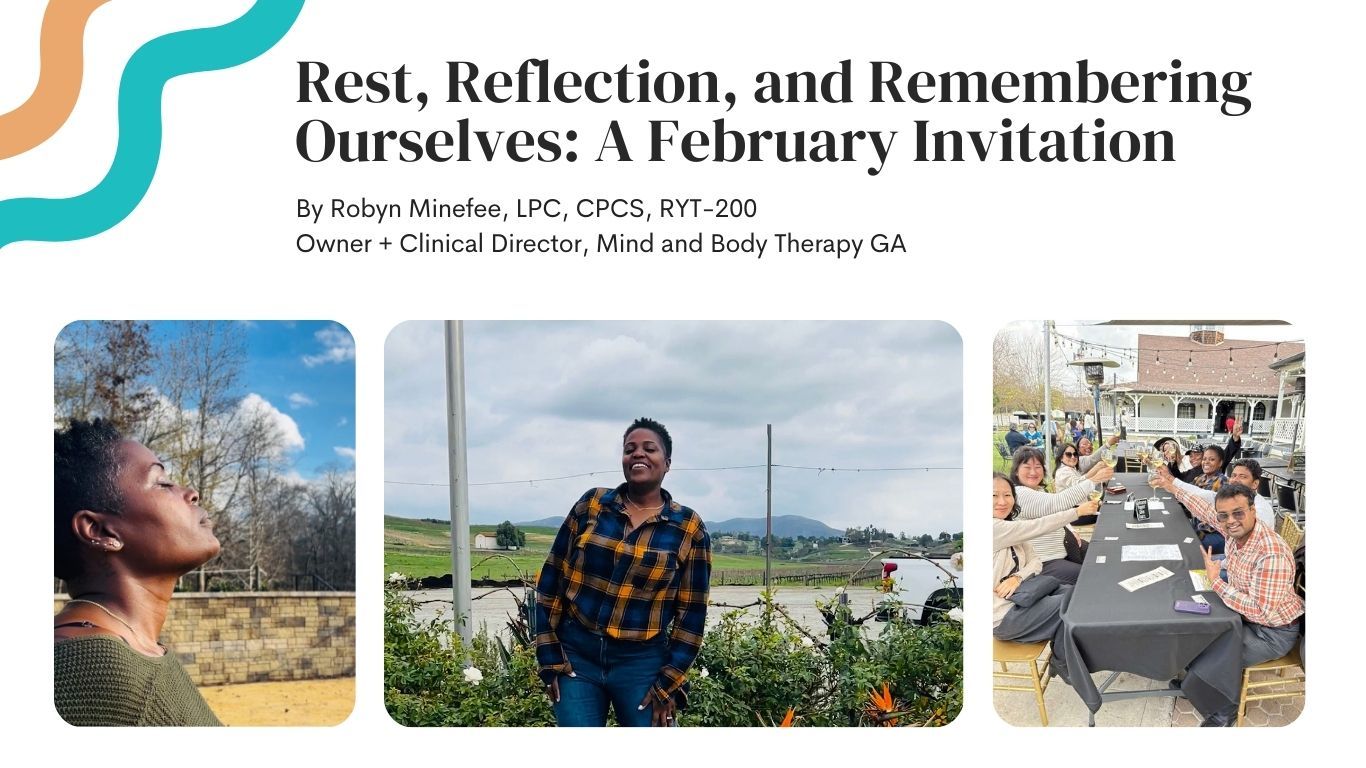


A gentle reminder to slow down, listen to your nervous system, and meet yourself with compassion. A simple monthly check-in from Mind and Body Therapy GA.

By Robyn Minefee, LPC, CPCS, RYT-200 Owner + Clinical Director, Mind and Body Therapy GA If you’ve ever crossed paths with someone who seems to “have it all together” — always productive, always showing up, always smiling — there’s a chance you’ve met someone living with high-functioning depression. And if you’re reading this and thinking, “Whew… that might be me,” you’re not alone. High-functioning depression doesn’t always look like what we traditionally imagine when we hear the word depression. There are no obvious signs like staying in bed all day or withdrawing from everything and everyone. Instead, people push through. They keep going. They perform. They achieve. They show up for everybody but themselves. As a therapist, I see this all the time — especially among Black women, high achievers, healers, caretakers, and those who have learned to “be strong” even when the weight is unbearable. Let’s talk about what high-functioning depression really looks like… and why naming it is the first step toward healing. For more on what high-functioning depression is and how it shows up, you can also read this helpful resource from the Cleveland Clinic: 👉 https://health.clevelandclinic.org/high-functioning-depression

The holidays are often painted as a time of joy, connection, and celebration. But for many of us, they can also bring emotional exhaustion, pressure to please, and the resurfacing of old family patterns we’ve worked hard to heal from. If the thought of “holiday cheer” comes with a deep sigh instead of excitement, you’re not alone. The truth is, you can love your people and still protect your peace. That’s where boundaries come in — not as walls to keep others out, but as gentle fences that honor your well-being.

Every year on October 10, the world comes together to recognize World Mental Health Day—a reminder that our well-being is just as important as any other part of our health. This year’s theme continues to highlight the importance of awareness, support, and resilience in navigating life’s challenges. At Mind and Body Therapy, we believe that caring for your mental health is not a luxury—it’s a foundation for living a meaningful life. In the rush of daily responsibilities, it’s easy to put yourself last. But today, we encourage you to pause, breathe, and invest in your well-being.

Seasonal depression is a type of depression that typically begins in the fall or winter, when daylight hours grow shorter, and improves during spring and summer. It goes beyond the “winter blues” and can interfere with daily life, relationships, and work.

Honoring “no” in a culture that demands “yes” is an act of radical self‑respect—especially for Black folks whose bodies have historically been sites of labor, control, and adaptation.

Reclaiming rest is a radical refusal of the narrative that our worth is measured by output. Through somatic therapy, Black folks can relearn the language of their bodies—recognizing fatigue as wisdom, pleasure as protest, and presence as power.

Healing is not solely an individual journey; it is deeply rooted in community and cultural practices. Reconnecting with ancestral traditions, storytelling, music, and communal gatherings can provide a sense of identity and belonging.